
When planning a custom home, major renovation, or home addition, one of the most important decisions you’ll make happens before construction even begins:
Should you choose a Design-Build firm or follow the traditional construction process?
Most homeowners focus on finishes, budgets, and timelines, but the project delivery method can have an even greater impact on the overall success of your project.
In South Florida’s fast-moving construction market, understanding the difference between Design-Build and Traditional Construction can save time, reduce stress, and help avoid costly surprises.
Let’s break down the pros and cons of each approach.
What Is Traditional Construction?
The traditional construction model separates the design and construction phases into two different contracts.
Typically, the process looks like this:
- Hire an architect or designer.
- Complete the plans and drawings.
- Obtain bids from contractors.
- Select a contractor.
- Begin construction.
In this model, the architect and contractor operate independently.
While this approach has been used successfully for decades, it often creates challenges when communication gaps arise between the design team and the builder.
What Is Design-Build Construction?
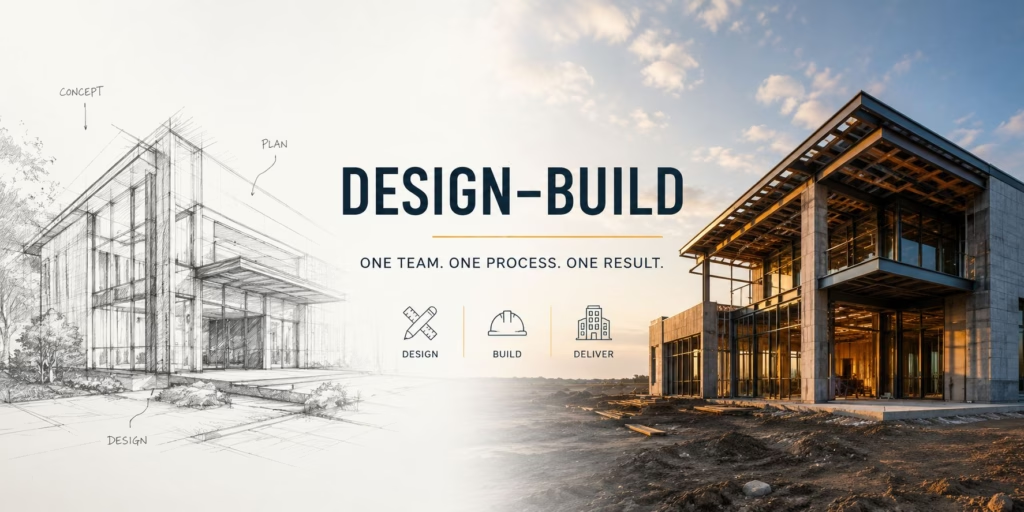
In a Design-Build model, the homeowner works with a single team that manages both design and construction under one contract.
Instead of hiring separate parties, the Design-Build firm coordinates:
- Design development
- Budget planning
- Engineering coordination
- Permitting
- Construction management
- Project execution
The entire process operates under one unified vision and one accountable team.
Why More South Florida Homeowners Are Choosing Design-Build
South Florida construction projects involve unique challenges:
- Strict permitting requirements
- Hurricane-resistant building codes
- Flood zone considerations
- Material lead times
- High labor demand
Because of these complexities, many homeowners are finding that Design-Build provides a more streamlined experience.
By involving the construction team early in the design process, potential issues can often be identified before they become expensive problems.
Comparing Design-Build vs Traditional Construction
Communication
Traditional Construction
The homeowner often becomes the middleman between the architect and contractor.
Questions, revisions, and conflicts may require coordination between multiple parties.
Design-Build
The design and construction teams work together from the beginning, reducing communication gaps and simplifying decision-making.
Advantage: Design-Build
Budget Control
Traditional Construction
Many homeowners complete architectural plans before receiving contractor pricing.
Unfortunately, this sometimes leads to designs that exceed the intended budget.
Design-Build
Budget discussions happen during the design phase, helping align expectations before construction begins.
This often reduces the need for costly redesigns later.
Advantage: Design-Build
Project Timeline
Traditional Construction
The design phase is completed first, followed by bidding and contractor selection.
This sequential process can extend project timelines.
Design-Build
Design and construction planning overlap, creating opportunities to accelerate the overall schedule.
Advantage: Design-Build
Accountability
Traditional Construction
When challenges arise, homeowners may find themselves caught between different parties.
Questions about responsibility can become difficult to navigate.
Design-Build
One team oversees the entire project, providing a single point of accountability.
Advantage: Design-Build
Is Traditional Construction Ever the Better Option?
In some cases, yes.
Traditional construction may be appropriate when:
- A homeowner already has a long-standing relationship with an architect.
- The project requires a highly specialized design consultant.
- The homeowner prefers to manage multiple project partners independently.
For certain unique projects, this approach can still be effective.
The key is understanding the additional coordination that may be required.
Why Design-Build Works Particularly Well in South Florida
South Florida projects often involve more moving parts than homeowners expect.
From zoning reviews and permitting requirements to engineering coordination and hurricane compliance, construction projects can become complex quickly.
The Design-Build approach helps simplify the process by bringing all stakeholders together early.
This allows the project team to:
- Identify challenges sooner
- Improve budgeting accuracy
- Reduce delays
- Streamline communication
- Create a smoother homeowner experience
For many homeowners, the reduced stress alone becomes one of the biggest advantages.
Which Approach Is Right for Your Project?
There is no one-size-fits-all answer.
However, homeowners seeking:
- Better budget visibility
- Faster project delivery
- Simplified communication
- A more collaborative experience
often find Design-Build to be the more efficient option.
Those who prefer managing separate consultants and contractors may still prefer the traditional route.
The right choice ultimately depends on your goals, priorities, and level of involvement.
Final Thoughts
Building or renovating a home is one of the most significant investments most families will ever make.
Choosing the right project delivery method can impact everything from cost and schedule to communication and overall satisfaction.
While both approaches can deliver successful results, many South Florida homeowners are increasingly turning to Design-Build because it offers a more streamlined, transparent, and collaborative process.
When the design team and construction team work together from day one, projects tend to move more efficiently—and homeowners gain confidence knowing there is one team guiding the process from concept to completion.
Build With Confidence
At Corbea Design Group, we believe successful projects start with strong planning, clear communication, and a unified vision.
Our Design-Build approach allows homeowners to work with a single experienced team throughout every phase of the project—from initial concepts to final construction.
Whether you’re planning a custom home, major renovation, or home addition, we’re here to help turn your vision into reality.